

Hot Off The Press: New Regulations on Lead1
Access to cleaner drinking water is a cornerstone of our health and wellbeing. Contaminated water poses serious risks, including lead poisoning, which can affect both our physical and mental health.
It’s critical to understand the risks of drinking contaminated water, the sources of contaminants like lead, and the measures taken to provide cleaner drinking water, including water filtration and treatment.

Why Did We Use Lead In Pipes In The First Place?
Long before we became aware lead can cause impaired cognitive function and memory2 and a host of other bodily issues, it was used in ancient plumbing systems. The first recorded use of lead as piping was by the Romans as far back as 2,000 years ago in water pipes and the famous aqueducts. Because it was easily malleable, resistant to corrosion, and durable it was ideal for shaping into pipes and fittings.
In fact, the term "plumbing" is Latin for “plumbum”, meaning lead. Because it was so easy to install and was naturally resistant to leaks, it was a staple in plumbing materials for centuries. Fast forward to the 19th and 20th centuries, without any viable alternatives, lead has been used consistently in municipal water systems and in residential homes throughout the United States and the world.
History of Lead Health Concerns
In the 1920s, health concerns began to arise regarding lead exposure when it was discovered that lead is toxic to humans and children in particular. Continued consumption of lead-induced water can cause a variety of health issues such as developmental delays, learning disabilities, and damage to the nervous system.
Despite these known dangers and the remaining lack of viable alternatives, lead pipes continued to be installed until the 1980s. Finally, in 1986, the U.S. Congress amended the Safe Drinking Water Act3 to ban the installation of lead pipes in new plumbing projects.
Today, the widespread use of lead pipes is a legitimate concern as many older urban regions still use them to transport our drinking water. The Environmental Protection Agency (EPA) estimates there are still 6 to 10 million lead service lines4 in use across the United States. While many municipalities have made efforts to replace these aging pipes, the process is expensive and time-consuming. President Biden’s infrastructure plan aims to accelerate the removal of lead pipes nationwide, and with these newly enacted regulations on lead removal, it's the hope this process will be hastened to eliminate this critical public health risk in our drinking water.

How Lead Finds Its Way into Drinking Water
Lead is one of the top contaminants found in drinking water and it poses severe health risks. Ingesting it can result in lead poisoning, a serious health threat for adults and especially children. Lead enters our environment from several sources5:
- Lead pipes, once widely used, corrode over time and leach lead into our tap water. While municipalities are working to replace lead pipes, many still exist throughout the infrastructure of many American cities.
- Industrial processes and manufacturing often release lead particles into the air, which can settle into our water systems.
- Old paint shedding from buildings can contribute to soil contamination, flowing into our water supply during heavy rains. These are the “paint chips” you may have heard people refer to.
- Lead-rich soil and rocks can leach this metal into groundwater, which could end up in your tap.
These sources continue to make it difficult to maintain a cleaner drinking water supply that’s free of lead, posing risks to our drinking water quality and, consequently, to our health. A filter certified to reduce lead is a practical way to lower your household’s exposure in the meantime. See which water filters are certified to reduce lead.
Measures for Preventing Lead from Entering Water Supply
Regulations and water treatment technologies play crucial roles in ensuring access to better drinking water, despite the challenges posed by aging infrastructure and natural contamination sources. Drinking water regulations aim to ensure cleaner drinking water for all. They target lead pipes, a major source of tap water contamination, mandating water treatment and periodic testing.
Despite rigorous drinking water regulations, lead still finds its way into our water supply. Testing and maintenance present challenges, often going unchecked until contamination signs become undeniable. Because of these challenges, cleaner drinking water demands more than just regulations; it needs immediate action and practical solutions for lead reduction and water treatment. Using a water filtration system at home is one of these solutions.
How ZeroWater’s 5-Stage Filtration Systems Work
Imagine a protective shield, designed to safeguard your health by reducing the amount of lead and other harmful contaminants from your water. This is essentially how a 5-stage filtration system works.
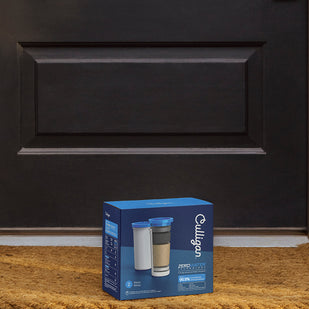
The 5-stage filter in Culligan with ZeroWater Technology pitchers and dispensers uses ion exchange. It is certified to reduce contaminants commonly found in tap water, such as lead and PFAS.
The five stages are:
Stage 1: Mesh Filter Screen – Water first passes through a mesh screen.
Stage 2: Foam Distributor – A layer of foam evenly distributes water to prepare for the next stages.
Stage 3: Granular Activated Carbon – Water then passes through granular activated carbon.
Stage 4: Ion-Exchange Resin – Water passes through an ion-exchange resin that absorbs inorganic compounds.
Stage 5: Ultra-Fine Mesh Screen – In this final stage, water continues through an ultra-fine mesh screen and then out of the filter.
This methodical process results in great tasting drinking water.

Shop Culligan with ZeroWater Technology
Culligan with ZeroWater Technology pitchers and dispensers are certified to reduce lead. Shop pitchers, dispensers and replacement filters, or compare every water filter certified to reduce lead.
Not sure which one fits your home? Read the water filter pitcher guide, or get answers on the Culligan with ZeroWater Technology support page.


