

Water filter pitchers: how they work and what they remove
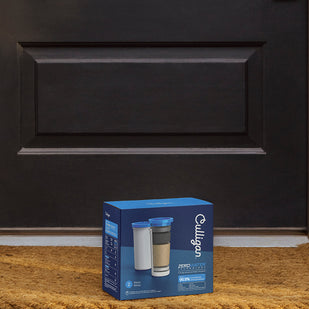
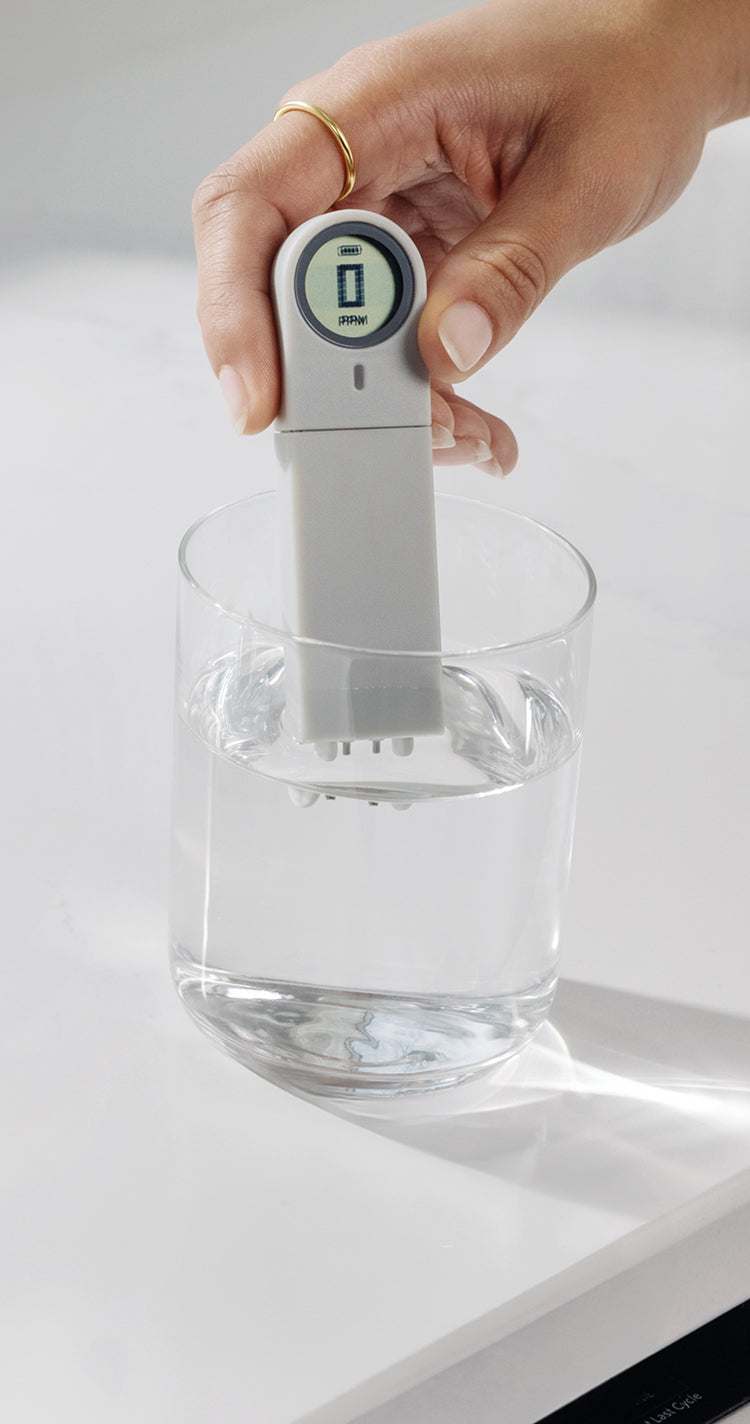
A water filter pitcher uses gravity to pull tap water through a filter cartridge. What comes out depends on what that filter is certified to reduce. Culligan with ZeroWater Technology uses 5-stage filtration that is IAPMO certified to reduce Total PFAS (forever chemicals), lead, fluoride, and select pharmaceuticals and pesticides.* Every pitcher includes a TDS meter so you can check your water at home.
*See the performance data sheet on our certified performance
page for specific contaminant reductions.
How does a water filter pitcher work?
You fill the top reservoir and gravity pulls the water down through a filter cartridge into the pitcher below. Most basic pitcher filters use activated carbon, which mainly improves chlorine taste and odor. Filters that add ion-exchange resin also capture dissolved metals and other inorganic compounds.
The box will not tell you what a pitcher removes. Check what the filter is certified to reduce, and to which standard. NSF/ANSI 42 covers taste and odor, NSF/ANSI 53 covers health-related contaminants such as lead and Total PFAS, and NSF/ANSI 401 covers emerging compounds. Culligan with ZeroWater Technology is IAPMO certified to all three. See the full list on our certified performance page.
What does a water filter pitcher remove?


What's inside a 5-stage pitcher filter?
Most pitcher filters rely on activated carbon. A 5-stage filter adds ion-exchange resin and finer screens, and each stage does a different job.
-
Step 1: Mesh Filter Screen
Captures fine sediment before it reaches the filter bed.
-
Step 2: Foam Distributor
Removes suspended solids and slows water flow for full-contact filtration.
-
Step 3: Activated Carbon
Reduces chlorine taste and odor and organic compounds.
-
Step 4: Ion-Exchange Resin
Captures dissolved metals and other inorganic compounds.
-
Step 5: Ultra-Fine Mesh Screen
Final pass to capture ultra-fine particles and ensure nothing gets through.
The result: 5-stage filtration removes 99.9% of total dissolved solids (TDS)¹ for the purest-tasting water, and the included TDS meter lets you check it.
How long does a water pitcher filter last?
Each Culligan with ZeroWater Technology filter is rated for 20 gallons. How long that takes depends on how much you drink and how many dissolved solids are in your tap water; harder water uses a filter up faster.
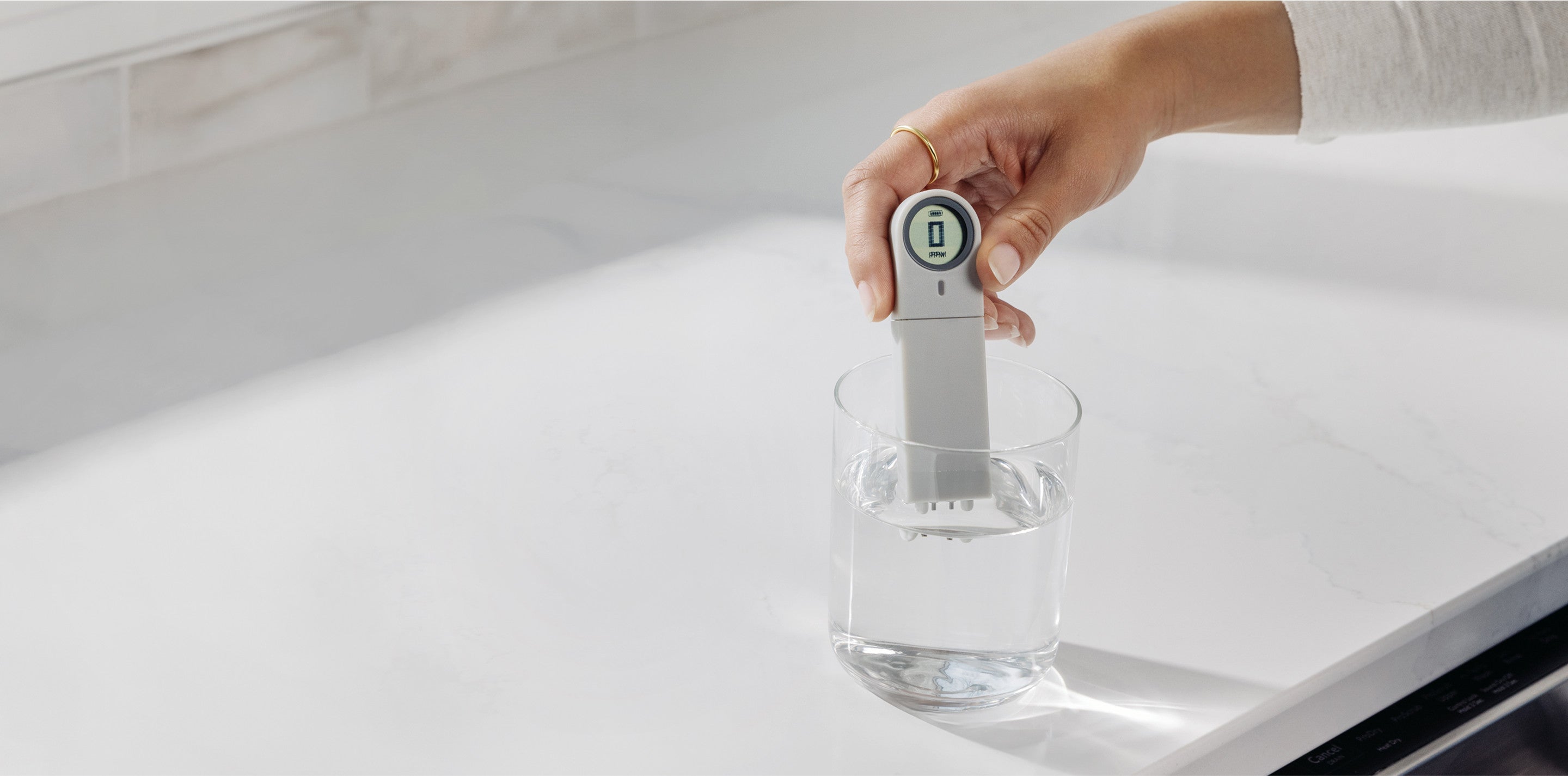
You don't have to guess. The included TDS meter measures dissolved solids in parts per million, and when filtered water reads 006 or higher it's time for a new filter. The meter measures dissolved solids only, so it can't detect contaminants like lead or Total PFAS. For step-by-step help, see when to change your filter.
¹ Total dissolved solids (TDS) are organic and inorganic materials, such as metals, minerals, salts, and ions dissolved in water. TDS can affect the taste and appearance of water.
ZeroWater vs. Brita Standard: what's the difference?
| Certified to reduce |

|

|
|---|---|---|
| Chlorine | ||
| Lead | ||
| Total PFAS | ||
| Nitrates | ||
| Chromium 6 | ||
| Mercury | ||
| Cadmium | ||
| Copper | ||
| Zinc | ||
| Fluoride | ||
| Bisphenol A (BPA) | ||
| Nonylphenol | ||
| Metolachlor | ||
| Linuron | ||
| DEET | ||
| Carbamazepine | ||
| Meprobamate | ||
| Atenolol | ||
| Trimethoprim | ||
| Ibuprofen | ||
| Naproxen | ||
| Estrone | ||
| Phenytoin |
**Brita Standard filter OB03. Brita is a trademark of Brita LP. PUR standard filter PPF900ZTM. PUR is a trademark of PUR BRANDS LLC. As of 3/1/2025 Brita® and PUR® Performance Data Sheets.

Pitcher or dispenser: which size do you need?
A pitcher fits in the fridge and pours easily. A dispenser holds more and pours from a spigot, which suits families and anyone filling water bottles every day. Pitchers and dispensers use the same filter.
- 7 Cup Pitcher: fits most fridge doors
- 10 Cup and 12 Cup Pitchers: fit most fridge shelves
- 22 Cup and 32 Cup Dispensers: for families and filling bottles
- 40 Cup Glass Dispenser: our glass option, made for the counter
- Drop-and-twist filter install, no tools needed


Water filter pitcher FAQs
Yes, for what their filter is certified to reduce. A basic carbon filter mainly improves chlorine taste and odor. To reduce health-related contaminants like lead or Total PFAS, look for certification to NSF/ANSI 53. Culligan with ZeroWater Technology is IAPMO certified to NSF/ANSI 42, 53 and 401.
Only if the filter is certified for it. Culligan with ZeroWater Technology is certified to remove 99.7% of Total PFAS under NSF/ANSI 53, which covers PFOA, PFOS, PFHxS, PFNA, PFHpA, PFBS and PFDA. Learn more about PFAS in drinking water.
Some do. Culligan with ZeroWater Technology is certified to remove 98.9% of lead at pH 6.5 and 98.8% at pH 8.5 under NSF/ANSI 53. See our lead water filters.
Most pitcher filters are not certified for fluoride. Culligan with ZeroWater Technology is certified to remove 99.7% of fluoride under NSF/ANSI 53. Read more about fluoride water filters.
Culligan with ZeroWater Technology pitchers are not certified for microplastics. If microplastics are your main concern, Culligan with MaxClear Technology gravity water filter systems are certified to remove 96.5% of microplastics (0.5 to 1 micron) under NSF/ANSI 401. See our gravity water filter for microplastics.
No. Pitcher filters, including ours, are made for tap water that is already treated to be safe to drink. Do not use them on water of unknown quality without disinfecting it first.
Our glass option is the 40 Cup Glass Dispenser, which uses the same 5-stage filter as our pitchers.
Neither is better by default. It comes down to what the filter is certified to reduce and how you use it. A faucet filter gives filtered water on tap but fits only some faucets. A pitcher or dispenser needs no installation and can go in the fridge.
90-day satisfaction guarantee
We back every pitcher with a 90-day peace-of-mind guarantee. Try it. Test the water with the included TDS meter. If you’re not satisfied with what you see, we’ll make it right.
¹ Environmental Working Group. PFAS Contamination in the U.S.: https://www.ewg.org/interactive-maps/pfas_contamination/
² U.S. Environmental Protection Agency. Lead Service Lines: https://www.epa.gov/ground-water-and-drinking-water/lead-service-lines
³ U.S. Geological Survey. Nationwide reconnaissance of contaminants of emerging concern in source and treated drinking waters of the United States: Pharmaceuticals (2017): https://pubs.usgs.gov/publication/70182759
⁴ U.S. Geological Survey. Pesticides and Water Quality: https://www.usgs.gov/mission-areas/water-resources/science/pesticides-and-water-quality
⁵ Centers for Disease Control and Prevention. About Water Disinfection with Chlorine and Chloramine: https://www.cdc.gov/drinking-water/about/about-water-disinfection-with-chlorine-and-chloramine.html