


The most common misconception about the Lead and Copper Rule (LCR) is that the action level tells you what's safe to drink. It doesn't. The rule measures how well a water system controls corrosion across its network. It was never designed to certify the safety of the water coming out of any one household's faucet.
Lead is regulated differently from nearly every other contaminant, and understanding why is the key to understanding the whole rule. Most chemical contaminants are treated at the plant before water is distributed. Lead is different: it usually enters drinking water after it leaves the plant, leaching out of aging service lines, plumbing fixtures, and solder on its way to your tap. That's why the EPA's approach centers on tap-level testing and corrosion-control treatment rather than a single number measured at the source.
In 2024, the EPA finalized the Lead and Copper Rule Improvements (LCRI), which lowered the action level, tightened tap sampling, and set a framework for replacing lead service lines nationwide.
Quick summary
- The CDC and the American Academy of Pediatrics agree there is no safe level of lead exposure for children. The EPA's health-based target for lead in water is zero.
- An action level is not a Maximum Contaminant Level. It's a regulatory trigger inside a treatment-technique framework, not a health-based ceiling for every home.
- Lead is regulated differently because it contaminates water after treatment, inside the distribution and plumbing system.
- The 90th-percentile method is a system-wide performance measure. By design, individual homes can have elevated lead even when the system as a whole doesn't register an exceedance.
- The 2024 LCRI set a 10 ppb action level and a mandatory lead service line replacement framework, but most water systems don't move to the new compliance regime until November 1, 2027. Until then, the existing LCR generally applies, with some carried-forward requirements.
MCLG vs. MCL vs. Action Level
Three terms get confused constantly. Sorting them out makes the entire rule easier to read.
Maximum Contaminant Level Goal (MCLG)
The MCLG is a non-enforceable, health-based target: the level at which a contaminant causes no known or expected harm. For lead, the EPA's MCLG is zero, reflecting the conclusion that no amount of lead in drinking water is considered safe.
Maximum Contaminant Level (MCL)
The MCL is the legally enforceable cap on how much of a contaminant is allowed in water from a public system. The EPA sets MCLs as close to the MCLG as feasible, but factors in cost and technical limits. Because lead typically enters water downstream of the treatment plant, a plant-measured MCL would miss the real exposure point. For that reason, lead has no formal MCL. It has an action level instead.
Action Level (AL)
The action level is the threshold that, when exceeded at the 90th percentile under the LCR sampling protocol, triggers required steps like enhanced corrosion control and public notification. It is not a health-based limit, and it doesn't describe what any individual consumer should expect from their own tap. The action level has historically been 15 ppb; the LCRI lowers it to 10 ppb in 2027.
How water systems test for lead
Because lead comes from plumbing and infrastructure rather than source water, systems sample at the tap, not at the plant, to capture risk where lead actually enters the water.
Systems build a sampling plan using service-line and plumbing-material records to find the highest-risk homes, then draw from the highest available risk tier. Tier 1 sites are single-family homes with lead service lines or lead plumbing; Tier 2 sites are other buildings, including multifamily housing, meeting the same criteria. If a system can't fill its sample count from those tiers, it moves down to homes with lead connectors, galvanized lines downstream of lead, older copper plumbing joined with lead solder, and only then to lower-risk representative sites.
The protocol relies on first-draw sampling: water must sit unused for at least six hours before a sample is collected, capturing the stagnant conditions where lead is most likely to accumulate. Under the LCRI, homes on lead service lines require more than the traditional single one-liter draw. The sampler fills five consecutive one-liter bottles without shutting off the water, and the system tests both the first and fifth bottles. The first liter captures lead from the tap and interior plumbing; the fifth captures water that has been sitting in the service line itself.
Results are then ranked to find the 90th-percentile value and determine whether the action level was exceeded. For systems with enough Tier 1 and Tier 2 sites, the rule takes the higher of the first- and fifth-liter result from each site, lines those values up in ascending order, multiplies the total sample count by 0.9, and reads the value at that position. Systems short on high-risk sites move to the next tier. The method is deliberately weighted toward higher-risk homes.
What changed in 2024, and what hasn't yet
The 2024 LCRI changes are significant, but like most water regulations, they come with a multi-year runway before full compliance is required.
The final rule lowers the action level to 10 ppb, strengthens tap sampling, and modernizes how systems communicate with the public. Full compliance isn't required until late 2027. Until then, systems generally follow the existing LCR, except for a handful of carried-forward requirements: initial service line inventories, service line notifications, and 24-hour Tier 1 public notice when lead exceeds 15 ppb. For most systems, lead and galvanized-requiring-replacement service lines under their control must be replaced within 10 years of the November 2027 compliance date.
Current legal challenges
The American Water Works Association (AWWA) has challenged the LCRI in the DC Circuit, arguing the rule is too costly for systems to meet and that the replacement timeline isn't feasible. The EPA has signaled it intends to defend the rule. As of early 2026, the case remains active and briefing has progressed, with oral argument expected after briefing but no date publicly set.
What this means for your home
The EPA is moving toward lower action levels and full lead service line replacement, which should reduce exposure across systems over time. But none of that changes the core point: meeting the rule is not a guarantee of safety at your specific tap. A system can be fully compliant while individual homes still have elevated lead, because the health-based target for lead is zero and the action level was never meant to describe household water quality.
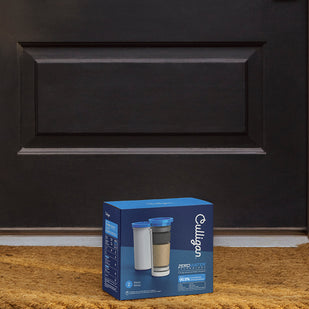
If you're concerned about lead, the most reliable step is to test your own tap water and use a filter certified to reduce lead at the point of use. You can learn more about lead in drinking water and which filters are certified to reduce it, or explore filtration built around tested contaminant reduction:
- For pitcher and dispenser filtration: Culligan with ZeroWater Technology water filter pitchers
- For countertop gravity systems: Culligan with MaxClear Technology gravity water filter systems
- Shop all Culligan with MaxClear Technology gravity water filter systems
Lead and Copper Rule FAQs
Does meeting the lead action level mean my water is safe?
No. The action level is a system-wide regulatory trigger, not a household safety guarantee. A water system can be fully compliant while individual homes still have elevated lead at the tap, which is why the EPA's health-based target for lead is zero.
What is the difference between a Maximum Contaminant Level and an action level?
A Maximum Contaminant Level (MCL) is a legally enforceable, plant-measured limit. An action level is a regulatory trigger inside a treatment-technique framework, measured at the tap at the 90th percentile. Because lead enters water after it leaves the treatment plant, lead has no formal MCL and is governed by an action level instead.
Why is lead regulated differently from other drinking water contaminants?
Most contaminants are treated at the plant before distribution. Lead is different because it usually enters drinking water after treatment, leaching from aging service lines, plumbing fixtures, and solder. That is why the EPA's framework relies on tap-level sampling and corrosion control rather than a single source-water limit.
What changed in the 2024 Lead and Copper Rule Improvements (LCRI)?
The 2024 LCRI lowered the lead action level to 10 ppb, strengthened tap sampling, and set a mandatory framework for replacing lead service lines. Most water systems do not transition to the new compliance regime until November 1, 2027, and continue following the existing rule until then, with some carried-forward requirements.
Sources
- U.S. EPA — Basic Information About Lead in Drinking Water
- U.S. EPA — LCRI Questions and Answers
- U.S. EPA — Final LCRI Technical Fact Sheet: Public Education Requirements (PDF)
- U.S. EPA — Public Notification Rule Compliance Help for Water System Owners and Operators
- NRDC — American Water Works Association v. EPA (Lead and Copper Rule Improvements)


