


In 2024, the U.S. EPA finalized the first-ever federal drinking water limits for PFAS in drinking water, a landmark regulatory action confirming that forever chemical contamination in public water supplies is a national concern, not a local one. Those rules have kept shifting since: in 2026, the EPA proposed extending compliance deadlines and rescinding the limits for several compounds. If you want the current state of play, here's where PFAS drinking water regulation stands in 2026
The problem is that the filter market responded faster than the science could keep up with. Search "PFAS water filter" and you'll find dozens of products claiming to reduce forever chemicals. Most of those claims are unverified.
What does "Certified to Reduce PFAS" actually mean?
Not all PFAS claims are equal. There's a meaningful difference between a manufacturer claiming their filter reduces PFAS and a filter that has been independently tested and verified to do so.
The standard to look for: NSF/ANSI 53. This is the health-effects certification standard for water treatment products. A filter certified under NSF/ANSI 53 for Total PFAS has been tested by an accredited third-party laboratory under controlled conditions and verified to reduce PFAS concentrations by a specified percentage.
The certification body matters. IAPMO (International Association of Plumbing and Mechanical Officials) and NSF International are the two primary accredited certification bodies in the U.S. If a filter isn't certified by one of these organizations — or an equivalent accredited body — the PFAS claim cannot be independently verified.
"Total PFAS" vs. specific compounds. Some certifications cover only PFOA and PFOS — two of the most studied PFAS compounds. Total PFAS certification covers the full chemical class — not just the two most studied compounds, PFOA and PFOS.
If a filter doesn't list its NSF/ANSI 53 certification specifically for PFAS — with a named certifying body — its PFAS claims are unverified.
This post covers what it actually means for a filter to be certified for PFAS reduction, which Culligan products carry that certification, and what to do if you're relying on a filter that doesn't.
Deep dive into PFAS and how to reduce your exposure
The best pitcher filter for PFAS: Culligan with ZeroWater Technology
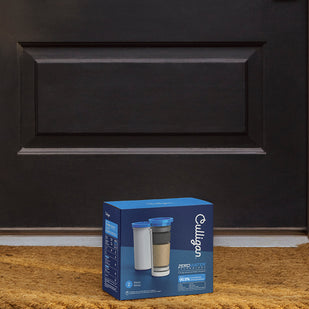
Culligan with ZeroWater Technology pitchers and dispensers are independently certified by IAPMO to reduce Total PFAS by 99.7% under NSF/ANSI 53.
The technology that makes this possible is 5-stage ion exchange filtration. Standard pitcher filters use activated carbon, which adsorbs some PFAS compounds but cannot reach them all. Ion exchange resin — the core of ZeroWater's filtration — binds to a broader range of dissolved compounds including the full spectrum of PFAS covered under Total PFAS certification.
Beyond PFAS, Culligan with ZeroWater Technology is certified to reduce 25 additional contaminants, including lead (98.9%), fluoride (99.7%), chromium 6 (99.4%), pharmaceuticals, and pesticides — 26 certified contaminants in total. For households that want comprehensive certified protection, the ZeroWater platform goes well beyond PFAS alone.
PFAS certification details: IAPMO certified, NSF/ANSI 53, Total PFAS at 99.7%. Covers: PFOA, PFOS, PFHxS, PFNA, PFHpA, PFBS, PFDA.
Learn more about our water filter pitchers
The best gravity filter for PFAS: Culligan with MaxClear Technology
For households wanting a larger-capacity, countertop gravity filtration system, Culligan with MaxClear Technology is independently certified by IAPMO to reduce Total PFAS by 99.6% under NSF/ANSI 53.
MaxClear is notable for a specific distinction: it is the only gravity water filter system independently certified to reduce PFAS, lead, and microplastics simultaneously. Gravity filters in this format — large stainless steel countertop units that filter by gravity with no plumbing or electricity — are popular with households that want portability and larger capacity. Most of them, including Berkey, are not independently certified for PFAS.
Culligan with MaxClear Technology is available in two sizes:
- Scout: 2.25 gallon capacity, designed for 1–3 people
- Venture: 3 gallon capacity, designed for 4+ people
Both are made from brushed or polished stainless steel. Filters last approximately 6 months with typical household use.
Learn more about gravity water filter systems

Does Standard Brita filter PFAS?
Brita's standard filter — the one that comes with most Brita pitchers — is not certified to reduce PFAS.
Brita's standard filter is certified under NSF/ANSI 42, which covers chlorine taste and odor and a handful of aesthetic contaminants. It does not cover PFAS. If you own a standard Brita pitcher and you're relying on it for PFAS reduction, the certification data does not support that.
Brita's Longlast+ filter carries broader certification, including some PFAS-related coverage. However, it is certified to reduce fewer total contaminants than Culligan with ZeroWater Technology, and its PFAS certification scope is narrower than Total PFAS.
If PFAS reduction is your primary reason for using a pitcher filter, the certification data points clearly toward Culligan with ZeroWater Technology over Brita Standard.
Learn more about Culligan with ZeroWater Technology vs. Brita
Does a refrigerator water filter remove PFAS?
Most refrigerator water filters are not certified to reduce PFAS, and this is one of the more common misconceptions in the water filter category.
Standard refrigerator filters are typically certified under NSF/ANSI 42 — the aesthetic standard covering chlorine taste and odor. Reaching PFAS requires either ion exchange resin or a certified activated carbon block specifically designed and tested for PFAS reduction. Standard refrigerator filters use neither.
If your refrigerator filter's product documentation doesn't explicitly list NSF/ANSI 53 certification for Total PFAS from an accredited certifying body, it should not be assumed to reduce PFAS. A dedicated certified pitcher or gravity water filter system is a more reliable option for PFAS reduction and can be used alongside your refrigerator without replacing it.
Does Berkey remove PFAS?
Berkey water filters are not independently certified by NSF/ANSI-accredited organizations for PFAS reduction. Berkey markets its filters with contaminant reduction claims, but these claims are not backed by independent third-party certification under the NSF/ANSI 53 framework.
This doesn't mean Berkey filters have no effect on PFAS — it means the claim cannot be independently verified. For households making purchasing decisions specifically around certified PFAS protection, the absence of NSF/ANSI 53 certification is a meaningful gap.
Culligan with MaxClear Technology offers certified PFAS reduction (99.6%, IAPMO NSF/ANSI 53) in a gravity water filter format comparable to Berkey — with the addition of certified lead and microplastic reduction.
See how MaxClear compares to Berkey
Frequently asked questions
What water filter is certified to reduce PFAS?
Culligan with ZeroWater Technology (pitcher format) is certified to reduce Total PFAS by 99.7% (IAPMO, NSF/ANSI 53). Culligan with MaxClear Technology (gravity water filter system) is certified to reduce Total PFAS by 99.6% (IAPMO, NSF/ANSI 53). Both certifications cover the full Total PFAS compound class.
Does Brita filter PFAS?
Brita's standard filter is not certified to reduce PFAS. Brita's Longlast+ filter carries some PFAS-related certification but covers fewer total contaminants than Culligan with ZeroWater Technology.
What does NSF/ANSI 53 mean for PFAS?
NSF/ANSI 53 is the health-effects standard for water filtration. A filter certified under this standard for Total PFAS has been independently tested by an accredited laboratory and verified to reduce PFAS concentrations by a specified percentage — it is a verified claim, not a manufacturer assertion.
Is a pitcher or gravity filter better for PFAS removal?
Both Culligan with ZeroWater Technology (pitcher) and Culligan with MaxClear Technology (gravity system) are independently certified for Total PFAS reduction. The right format depends on household size and preference. Gravity systems offer larger capacity; pitcher filters are more compact and add TDS reduction and ion exchange filtration.
What is the difference between PFOA/PFOS and Total PFAS?
PFOA and PFOS are two specific compounds within the PFAS family. Total PFAS refers to the broader chemical class, which includes thousands of compounds. A filter certified for Total PFAS provides broader coverage than one certified only for PFOA and PFOS.


