
What is TDS in water and why it matters for what you drink
TDS stands for ‘total dissolved solids’ – a measure of all the substances hiding in your water, good and bad. These can include pollutants, microbial pathogens, heavy metals, and mineral compounds that make their way to your tap.
While it’s natural for water to contain some level of TDS, higher levels can impact the taste, odor, and appearance of your water, and may even contribute to issues like dry skin and hair.
Your TDS level can vary depending on where you live. Use the tool on the right to enter your zip code and see what’s in your water.
Enter your zip code to retrieve your area's average TDS reading.
By understanding your TDS levels, you can better assess water quality and choose the right filtration system for your needs.

Where do dissolved solids come from?
Dissolved solids are a measurement of compounds like minerals, salts and organic compounds that are dissolved into water through contact with rock and other surfaces. TDS can be made up of several different types of compounds (including but not limited to): calcium, magnesium, iron, sodium chloride and sulfides (which are compounds frequently found in groundwater supplies).
-
Wastewater and Contamination
Industrial waste, mining runoff, and water pipe erosion contribute to water pollution, introducing harmful substances and elevated total dissolved solids (TDS)
-
Environmental Disruptions
Decomposing algae, plants, and deceased animals release organic matter into water, increasing total dissolved solids (TDS). Effective water treatment is essential to maintain quality and safety.
-
Human Activities
Human activities, such as industrial discharges, agriculture, and urban runoff, contribute to elevated total dissolved solids (TDS) levels in water bodies, impacting aquatic ecosystems and necessitating water quality management.
-
Natural Sources
Minerals, salts, and ions from natural sources like rivers and groundwater contribute to total dissolved solids (TDS) in drinking water, influencing taste and quality. Monitoring and treatment ensure potable water.
Is high TDS water harmful?
Not necessarily. A high Total Dissolved Solids (TDS) reading doesn’t automatically mean your water is unsafe. It simply reflects how much dissolved material is present. In many cases, elevated TDS comes from harmless minerals like calcium or magnesium.
The EPA’s secondary (non-enforceable) guideline for TDS is 500 mg/L, which is based on taste, odor, and appearance—not health risk. The key issue is what makes up those dissolved solids. Potentially harmful contaminants like lead, PFAS, or certain pharmaceuticals can be present at very low levels and may not significantly impact a TDS reading at all.
This is why a TDS meter is useful for measuring changes in water quality and confirming filtration performance—but it doesn’t identify specific contaminants or guarantee safety on its own.
To better understand contaminants that may not show up in TDS readings:
TDS measures the total amount of dissolved substances in water, but does not identify specific contaminants or their health effects.
Real-time filtration proof
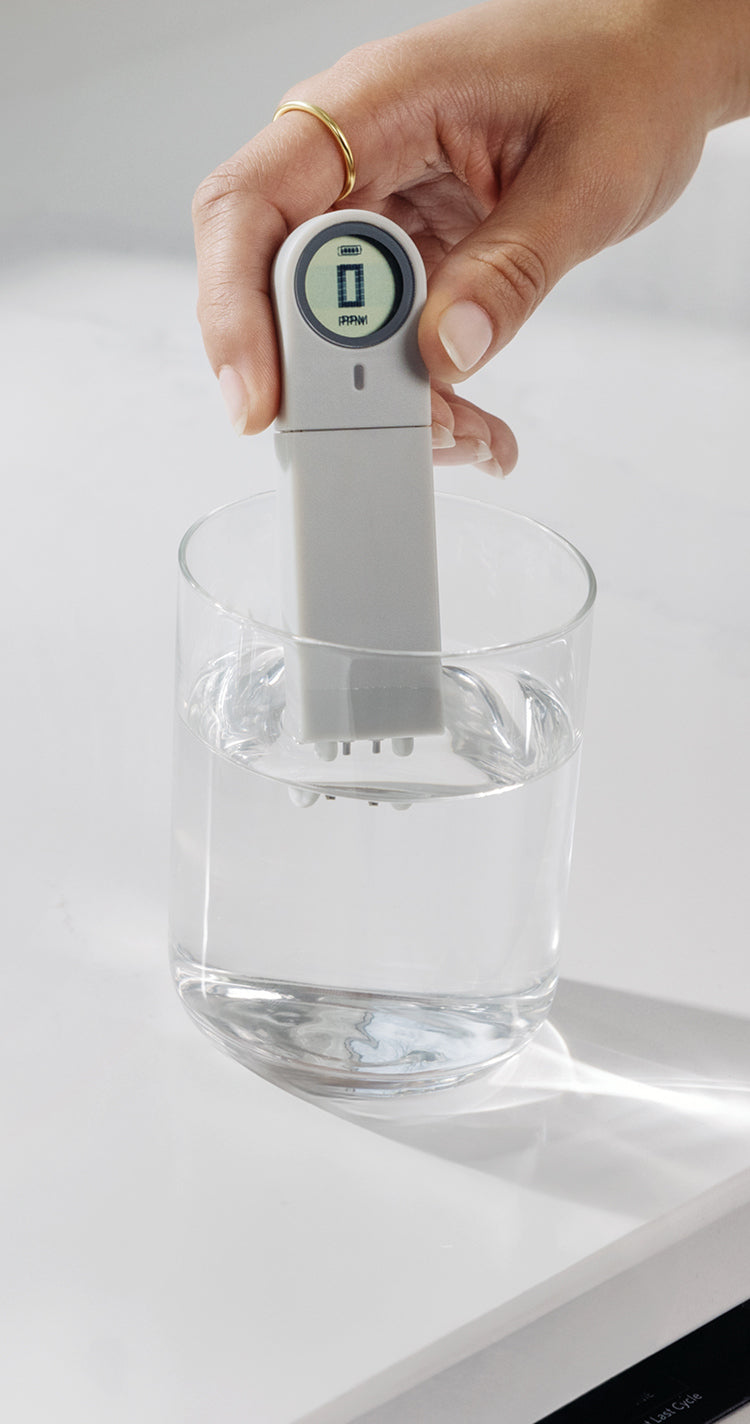
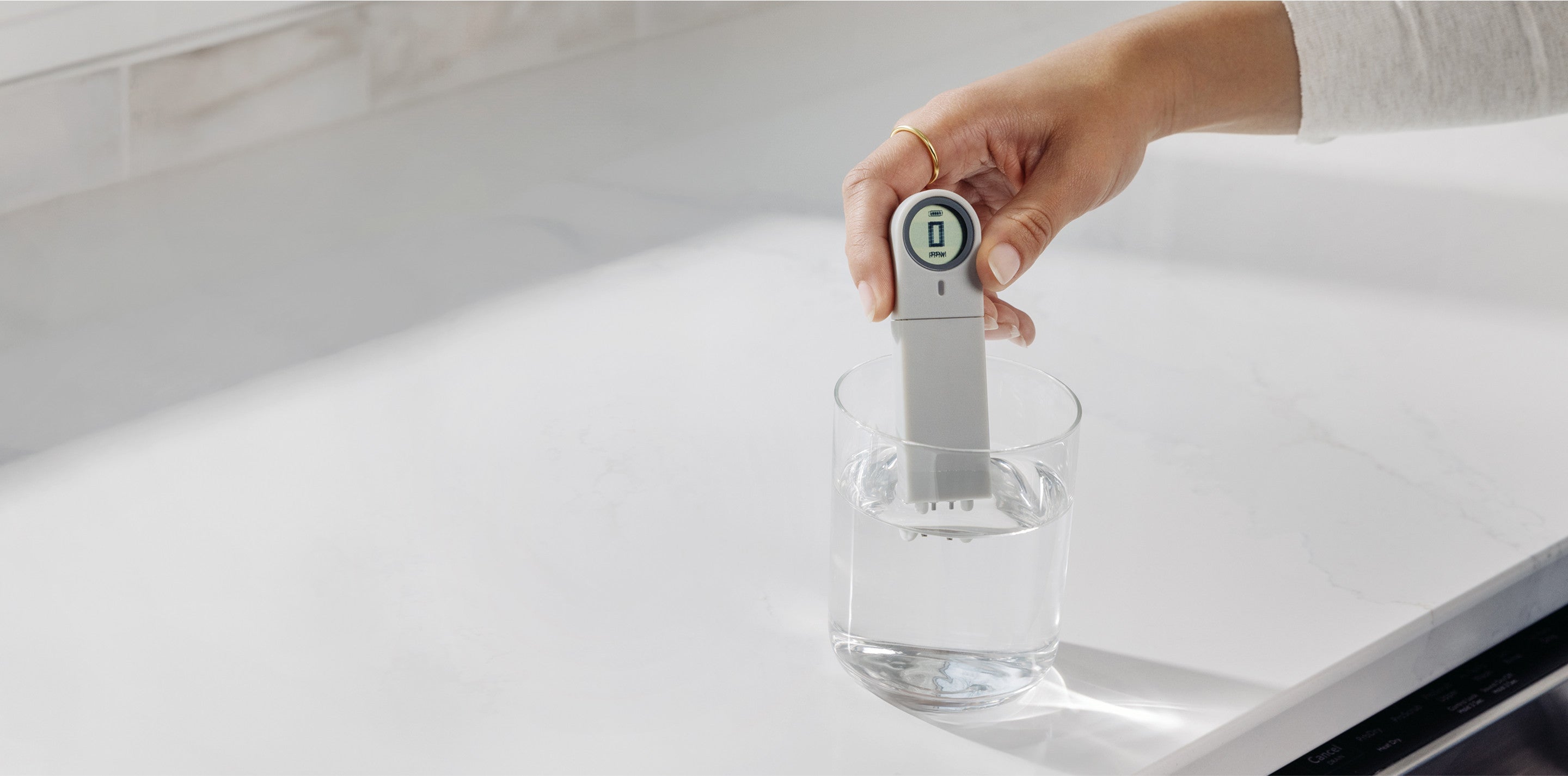
Every Culligan with ZeroWater Technology water filter pitcher and dispenser includes an electronic TDS meter to measure the level of total dissolved solids in your water. Our 5-stage filtration technology removes 99.9% of total dissolved solids from your water – guaranteed.

Drink with confidence
With our real-time integrated electronic meter, you'll always know your filter is working to remove dissolved solids and when it’s time to replace your filter. If your water has higher TDS, you'll need to replace your filter more often. But that’s a sign your filter is doing its job, removing more dissolved solids from your water.

How to test your water
Before placing the TDS meter into your new device, try it on your tap water first to see the difference.
-
Step 1
Start with your tap water. Insert the base of the meter into your water, and uncover what’s really there.
-
Step 2
Test your old pitcher or dispenser.
-
Step 3
Then test your Culligan with ZeroWater Technology filter – enjoy water with zero dissolved solids, guaranteed.

When to replace your filter
Your filter’s lifespan will vary based on the TDS level of the water you’re filtering. Here is a breakdown of TDS ranges and their projected filter lifespan.
Pitchers and Dispensers
Reduce 99.9% of TDS using Culligan with ZeroWater Technology


