Columbia, South Carolina ranked lowest for water quality
Columbia had failing grades for PFOA and PFOS, with PFOS levels nearly 2x the EPA's legal limit.
To help students understand what's in their water and take control of one of the most overlooked parts of campus life, Culligan analyzed lead and forever chemical levels in the drinking water of 50 college towns across the U.S.
The results were shocking.
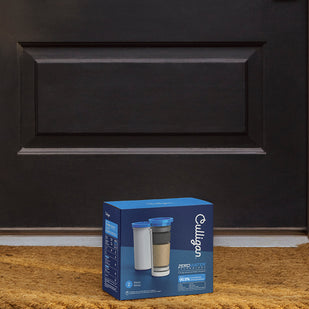
Culligan with ZeroWater Technology is certified to filter 5X more contaminants than a Standard Brita filer, including lead and Total PFAS.Â
A must have dorm-essential
Shop nowOther fast facts you should know.
Shop the only pitcher certified to filter both total PFAS (forever chemicals) and lead
The complete U.S. College Towns Water Quality Ranking
Â
| Â Ranking | College town | Home of | Lead grade | PFOS grade | PFOA grade | Hazard Mixture grade* |
|
50 |
Columbia, SC | University of South Carolina | D | F | F | C |
|
49 |
Tempe, AZ | Arizona State University Campus Immersion | C | F | F | F |
|
47 |
Newark, DE | University of Delaware | C | F | F | C |
|
47 |
New York City, NY | New York University | F | A | A | A |
|
46 |
New Brunswick, NJ | Rutgers University | C | F | F | A |
|
45 |
Brookings, SD | South Dakota State University | D | A | A | A |
|
44 |
University Park, PA | Penn State University | D | A | A | A |
|
43 |
South Kingston, RI | University of Rhode Island | C | A | F | C |
|
42 |
Boston, MA | Boston University | D | A | A | A |
|
41 |
Columbus, OH | Ohio State University | C | A | F | C |
|
40 |
Anchorage, AK | University of Alaska Anchorage | A+ | A | F | F |
|
38 |
Oxford, MS | University of Mississippi | A+ | A | F | C |
|
38 |
Raleigh, NC | NC State University | A+ | F | A | C |
|
37 |
Los Angeles, CA | UCLA | C | A | A | A |
|
36 |
Storrs, CT | UCONN | B | F | A | A |
|
35 |
Lawrence, KS | University of Kansas | C | A | A | C |
|
34 |
Athens, GA | University of Georgia | C | A | A | A |
|
33 |
Lincoln, NE | University of Nebraska | C | A | A | A |
|
32 |
Orono, ME | University of Maine | C | A | A | A |
|
31 |
Columbia, MO | University of Missouri | C | A | A | A |
|
29 |
Madison, WI | University of Wisconsin | C | A | A | C |
|
29 |
Seattle, WA | University of Washington | C | A | A | A |
|
28 |
Las Vegas, NV | University of Nevada | C | A | A | A |
|
27 |
Fargo, ND | North Dakota State University | C | A | A | A |
|
26 |
Orem, UT | Utah Valley University | C | A | A | A |
|
22 |
Ann Arbor, MI | University of Michigan | C | A | A | A |
|
22 |
Champaign, IL | University of Illinois Urbana | C | A | A | A |
|
22 |
Minneapolis/ St. Paul, MN | University of Minnesota | C | A | A | A |
|
22 |
Knoxville, TN | University of Tennessee | C | A | A | C |
|
21 |
College Park, MD | University of Maryland | C | A | A | A |
|
20 |
Boulder, CO | University of Colorado Boulder | C | A | A | A |
|
18 |
Bozeman, MT | Montana State University | C | A | A | A |
|
18 |
Orlando, FL | University of Central Florida | C | A | A | A |
|
17 |
Norman, OK | University of Oklahoma | B | A | A | C |
|
15 |
Burlington, VT | University of Vermont | C | A | A | A |
|
15 |
Corvallis, OR | Oregon State University | C | A | A | A |
|
14 |
Laramie, WY | University of Wyoming | C | A | A | A |
|
13 |
Ames, IA | Iowa State University | C | A | A | A |
|
12 |
College Station, TX | Texas A & M University | C | A | A | A |
|
8 |
Manoa Valley, HI | University of Hawaii | A+ | A | A | C |
|
8 |
Baton Rouge, LA | Louisiana State University and Agricultural & Mechanical College | C | A | A | A |
|
8 |
West Lafayette, IN | Purdue University | C | A | A | A |
|
8 |
Lexington, KY | University of Kentucky | A+ | A | A | C |
|
6 |
Fayetteville, AR | University of Arkansas | B | A | A | A |
|
6 |
Tuscaloosa, AL | University of Alabama | B | A | A | A |
|
5 |
Morgantown, WV | West Virginia University | B | A | A | A |
|
1 |
Albuquerque, NM | University of New Mexico | A+ | A | A | A |
|
1 |
Blacksburg, VA | Virginia Polytechnic Institute and State University | A+ | A | A | A |
|
1 |
Boise, ID | Boise State University | A+ | A | A | A |
|
1 |
Durham, NH | University of New Hampshire | A+ | A | A | A |
Methodology
Culligan ZeroWater analyzed publicly available water quality data(1)Â for 50 college towns in the United States. The 50 college towns were identified based on the largest university in each state by graduate and undergraduate hybrid enrollment, according to 2024 data from IPEDS(2). Water was specifically evaluated for lead and 5 of the 7 forever chemicals that make up the Total PFAS family. Â
Scoring System:
Using publicly available data, each of the 50 identified college towns received an A–F grade for lead and for 5 members of the Total PFAS chemical family, based on the federal regulatory limits (MCLs), regulatory goals (MCLGs), and public health toxicology thresholds, where available. Lead and Total PFAS were then weighted equally and combined into a single overall score to provide a simple snapshot of local water quality and presence of these contaminants. For lead, Culligan used the “90th percentile” action level of 10 parts per billion (ppb) set in the USEPA final Lead and Copper Rule Improvements (LCRI) regulation, reduced from 15 ppb in previous years. If exceeded, the action level triggers water systems to implement corrosion control measures and to notify the public. It is not a standard for establishing a safe level of lead.
Contaminant Selection
The analysis focused on lead and five forever chemicals within the Total PFAS family (PFOS, PFOA, PFHxS PFNA and HFPO-DA (GenX)). Lead remains a critical concern as it enters drinking water through aging infrastructure and has been the subject of regulation for decades. Conversely, PFAS, or “forever chemicals,” are considered an emerging contaminant and widely recognized as human-made with growing public concern and legal scrutiny.
1 Lead data was gathered from the public water systems’ (PWS) annual consumer confidence reports (CCR) and considered the federally mandated “90th percentile” calculation. Data for the PFAS chemicals was gathered from the Fifth Unregulated Contaminant Monitoring Rule (UCMR5) with samples taken between 2023-2025 and reported to the US EPA.
2Â Hybrid enrollment includes students enrolled in on-campus only sources and partial distance learning (online courses). It excludes numbers for students enrolled in distance learning only.
Learn more about these harmful contaminants​.
Total PFAS
"forever chemicals"
-
Where it comes from
PFAS are man-made chemicals found in products like non-stick cookware and firefighting foam. Known as “forever chemicals,” they don’t break down easily and can enter drinking water through industrial sites, landfills, and everyday products.
-
The risk
They can build up in the body over time and have been linked to serious health concerns including certain cancers, hormone and thyroid disruption, weakened immune response, and developmental effects in children.
-
How to protect yourself
Because they can’t be seen, tasted, or smelled in drinking water, many people may be exposed without realizing it. Culligan with ZeroWater Technology is the only pitcher certified to remove 99% of Total PFAS.Â
Lead
-
Where it comes from
Lead is used in plumbing materials. While modern regulations limit its use, older pipes and fixtures can still introduce lead into drinking water through corrosion.
-
The risk
Lead exposure can pose health risks, particularly for infants, young adults, and pregnant women. Even low levels of lead in drinking water can be a concern over time.
-
How to protect yourself
Because boiling water does not remove lead, many households use water filters that are certified to reduce lead. Culligan with ZeroWater Technology is certified to remove 97% of lead.
Culligan with ZeroWater Technology is certified to reduce 5x more contaminants than Standard Brita.
| Certified to reduce |
|
|
|
|---|---|---|---|
| Chlorine | |||
| Lead | |||
| Total PFAS (forever chemicals) | |||
| Chromium 6 | |||
| Copper | |||
| Zinc | |||
| Fluoride |
*Brita is a trademark of Brita LP. As of 6/17/2026 Brita® Performance Data Sheets.