
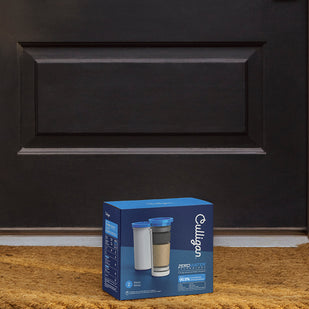

Gravity water filter systems
A gravity water filter system is a simple way to improve drinking water quality without electricity or installation. A gravity water filter works by allowing water to pass through specialized filtration media using only gravity.
Culligan with MaxClear Technology gravity systems combine multi-stage filtration with durable stainless-steel designs built for everyday drinking water. Many households choose gravity filtration to help address common concerns such as microplastics, PFAS, and lead.
Learn how gravity water filter systems work and how gravity filtration helps reduce contaminants in drinking water.

What is a gravity water filter?
A gravity water filter is a countertop filtration system that cleans water using gravity instead of electricity or water pressure.
Water is poured into an upper chamber and slowly passes through filter media. As the water travels through the filtration layers, contaminants can be reduced before the filtered water collects in a lower chamber ready to drink.
The Culligan with MaxClear Technology gravity filter uses both a high-grade ceramic outer shell and a filter core of proprietary carbon to reduce contaminants.
Gravity water filtration systems are popular because they are:
-
Easy to use
-
Simple to maintain
-
Portable and countertop-friendly
-
Able to filter larger volumes of water rather than typical pitcher filters
Because they do not require electricity or installation, gravity systems are a flexible solution for many homes.

How gravity water filtration works
Gravity filtration relies on a straightforward process that gradually filters water through specialized media.
-
Step 1: Add water to the upper chamber
Tap water is poured into the top reservoir of the gravity filtration system.
-
Step 2: Water passes through the filter media
Gravity pulls the water downward through filter media designed to interact with contaminants.
-
Step 3: Contaminants are reduced
As water moves through the filtration layers, the filter media can help reduce contaminants that may be present in drinking water.
-
Step 4: Filtered water collects in the lower chamber
Filtered water gathers in the lower chamber and can be dispensed through the spigot whenever it is needed.
Because gravity filtration happens gradually, the water spends more time passing through the filtration media.

Benefits of a Gravity Water Filter System
Gravity water filtration systems are designed to provide convenient access to filtered water at home.
-
No Electricity Required
Gravity water filters operate without electricity, making them easy to use in many environments.
-
Countertop Convenience
Most systems sit directly on the countertop and do not require installation or plumbing changes.
-
Higher Capacity Than Pitcher Filters
Gravity filtration systems often hold more water than pitcher filters, reducing the need for frequent refilling.
-
Consistent Filtration
Water slowly passes through the filtration media, allowing the filter materials time to interact with the water.
-
Simple Maintenance
Replacing gravity water filters is straightforward and helps maintain consistent filtration performance.
Because they do not require electricity or installation, gravity systems are a flexible solution for many homes.
What Contaminants Can Gravity Water Filters Help Reduce?
Water quality concerns can vary depending on location, plumbing, and environmental factors. Many households use filtration systems to help reduce contaminants that may be present in drinking water.
Depending on the filter technology used, gravity water filtration systems may be designed to reduce contaminants such as PFAS, microplastics, lead, pharmaceuticals, and pesticides.
Learn more about how filtration technologies address specific drinking water concerns below.
Filter what matters in your drinking water


How to choose the right gravity water filter system
When comparing gravity water filtration systems, several factors can help determine which option may be right for your home.
Filtration Technology
Different gravity filters use different filtration materials. Advanced filter technologies may include combinations of activated carbon and specialized filtration media designed to reduce certain contaminants.
Water Capacity
Gravity systems are available in different sizes depending on how much filtered water you want available at once.
Larger systems are often chosen by households that want to filter larger amounts of drinking water throughout the day.
Contaminant Reduction
Water filters may be certified to reduce specific contaminants, depending on the filter technology used.
Many consumers research filtration options based on concerns such as:
• Microplastics
• PFAS
• Lead
Because they do not require electricity or installation, gravity systems are a flexible solution for many homes.
Some shoppers researching gravity filtration systems compare options when looking for a Berkey alternative.
Shop gravity water filter systems
Choose a Culligan with MaxClear Technology gravity water filter system designed to help reduce microplastics and other emerging drinking water contaminants.


Scout 2.25 Gallon Gravity Countertop System


Venture 3 Gallon Gravity Countertop System


Gravity water filter FAQs
Some gravity water filters are designed to reduce microplastics depending on the filtration technology used. Advanced filtration media can help capture very small particles that may be present in drinking water.
Learn more about do gravity water filters remove microplastics.
Certain water filtration technologies are certified to reduce PFAS, also known as “forever chemicals.” The ability to reduce PFAS depends on the filter technology used within the system.
Gravity water filters typically hold more water and can filter larger volumes at once compared to standard pitcher filters. Pitcher filters are compact and convenient, while gravity systems are often chosen for higher capacity filtration.
¹ Environmental Working Group. PFAS Contamination in the U.S.: https://www.ewg.org/interactive-maps/pfas_contamination/
² U.S. Environmental Protection Agency. Lead Service Line Estimates (2023): https://www.epa.gov/ground-water-and-drinking-water/lead-service-line-replacement
³ Orb Media. (2017). Global Drinking Water Microplastics Study: https://orbmedia.org/stories/Invisibles_plastics
⁴ U.S. Geological Survey. Pharmaceuticals in Drinking Water Studies: https://www.usgs.gov/
⁵ U.S. Geological Survey. Pesticides in Groundwater (NAWQA Program): https://www.usgs.gov/mission-areas/water-resources/science/pesticides
⁶ Centers for Disease Control and Prevention. Water Disinfection and Treatment: https://www.cdc.gov/healthywater/drinking/public/water_disinfection.html